My First Year Selling Pokémon Cards: A Look at the Real Profits, Losses, and Lessons Learned
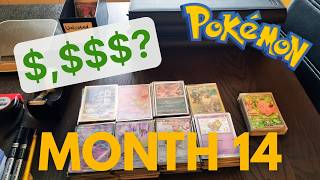
A year ago, I started with 50,000 bulk Pokémon cards to see if I could build a real business. Here’s a full recap of the journey, including the mistakes, what actually worked, and a transparent look at my revenue and profit numbers.
By NeoSatoshi
TL;DR
Quick answers
The core takeaways from this video, answered fast.
The Starting Point: 50,000 Bulk Cards
How do you turn a pile of 50,000 completely unsorted bulk cards into a business? That was the question I faced in June of last year. The first and biggest hurdle was simply getting all those cards into an inventory system so I could list them for sale.
Listing them one by one was out of the question. After some research, I made an unusual choice for a new seller: I bought a sorting machine. It wasn't cheap, but it saved me an incredible amount of time by creating CSV files I could use to list cards on different platforms.
Early Attempts and a Costly Failure
With the sorter running, I started listing on Cardmarket, the main platform for my region, and Ricardo, a Swiss auction site similar to eBay. To list on Cardmarket more efficiently, I used a third-party tool, TCG Power Tools.
One of my first big ideas was to create and sell "master sets" of common, uncommon, and rare cards from the bulk. It seemed like a good way to add value. In reality, it was a huge time sink. I spent hours sorting and building these sets, only to find they didn't sell and the price wasn't great. It was my first real failure and a lesson in how to value my time.
The Reality of a Slow Start
If you're just starting out, you need to accept one thing: it will be slow. Nobody knows you. You have to build up your accounts, get positive feedback, and slowly grow your inventory. My numbers show this clearly.
It will only compound over time... I just wanted to say that it is a long way not like you just list your cards and you sell everything.
My business today is focused on singles, but I started with a very small inventory. It's a long game, not an overnight success.
Expanding Channels and Encountering New Problems
In August, I expanded to Card Trader and saw an immediate sales spike. The problem? The first big order was a package to Italy that got stuck in customs for two months. I never received the money for those sales and eventually got the cards back in December.
It was a good lesson: every new channel, especially with international shipping, comes with its own set of potential problems. You have to learn how to handle customs, shipping regulations, and the inevitable mistakes.
The Long-Term Play: Building a Shopify Store
From the beginning, I knew the real power was in building my own webshop. Platforms like eBay and Cardmarket are great for getting started, but you're dependent on them. With your own Shopify store, you own the customer relationship.
It's not easy. For the first few months, my store got almost no traffic from Google. You have to build trust, work on SEO, and get your listings right. Many sellers avoid it because Cardmarket and eBay do the marketing for you.
Sync Your Shopify Store
Building your own Shopify store is a smart long-term play. NeoSatoshi helps you list cards and sync inventory between Shopify, eBay, and other marketplaces.
But the long-term payoff is huge. The most powerful part is building an email list. I only have about 40 customers on my mailing list, but when I send out an email about new stock or a discount, I get sales. It's a direct line to my customers, and the fees are much lower.
Key Lessons Learned from Year One
No Listings, No Sales
In December, I was away for the holidays and didn't list any new cards. My sales slowed to a trickle. It proved a simple rule: if you aren't actively adding to your inventory, your sales will dry up. You don't have to list every day, but aiming for once or twice a month is critical to keep momentum.
Flea Markets Weren't Worth the Time
I tried selling at a local flea market twice. It was a complete failure. I stood there for five hours and barely made enough to cover the table fee. My time is much better spent listing cards online or sourcing new collections. For me, selling online exclusively is the way to go, as it avoids the headache of managing a separate physical inventory for events.
The Problem with PSA Grading
I sent some cards to PSA for grading, but they've been stuck there for over eight months. With wait times that long, it's just not a viable part of my business model. I can't have capital tied up in cards I can't sell for nearly a year.
The Strategic Shift from Bulk to Singles
Starting with bulk was the right move. The margins are great—I paid about two cents per card and would sometimes find cards worth a dollar or even ten. It's low-risk and doesn't require much capital.
However, as my order volume grew to 10-50 orders a day, I found myself spending one to two hours every day just picking bulk cards from my inventory. It's incredibly time-consuming. To make the listing process faster, I moved from a standard set-based sorting system to a "chaos" system, which works much better.
Despite the improvements, I've now processed my last large bulk batch and am shifting my focus to buying and selling single cards from collections.
The Numbers: A Full Year of Revenue and Profit
For the first 10 months, the growth was slow and steady. Revenue was flat around $2,000 per month from January to March. Then, after shifting my strategy to buying and flipping collections, things took off.
- April: $200 profit (a low month due to a two-week holiday).
- May: $4,300 revenue, $1,300 profit. My best month ever.
- June (so far): On track for $7,000 revenue and $2,000 profit.
The numbers speak for themselves. The compounding effect is real. My year-to-date totals are now over $18,000 in revenue and $4,500 in profit. Shopify has grown to become my second-biggest sales channel, ahead of Cardmarket.
Main Takeaway After One Year
This business started as a pile of 50,000 bulk cards and is now a profitable, multi-channel operation. The key has been to just start, learn from failures (like master sets and flea markets), and adapt your strategy. It's a long game of consistent effort, but the slow, compounding growth is finally turning into significant results.
Related articles



Streamline Your Listings
Whether you're selling bulk or singles, NeoSatoshi's listing software helps you get your inventory online faster across multiple platforms.